MCQ : Important for NIPER JEE

Answers are declared !
1. Which of the following compounds would have the highest boiling point?
(a) CH3CH2CH2CH3
(b) CH3NH2
(c) CH3OH
(d) CH2F2
Answer:C
Explaination:This compound (methanol) forms the strongest hydrogen bonds of the available choices since oxygen is more electronegative than nitrogen. Although fluorine is more electronegative than oxygen there are no HF bonds in answer (d). Methanol also has some of the strongest dipole-dipole interactions of the available compounds although hydrogen bonding is the principle intermolecular attraction when a compound has an electropositive hydrogen atom and available non-bonding electron pairs.

2. The most stable conformational isomer of cis-1-bromo-2-chlorocyclohexane will have...
(a) both halide atoms in axial positions.
(b) both halide atoms in equatorial positions.
(c) the bromine atom in an axial position and the chlorine atom in an equatorial position.
(d) the bromine atom in an equatorial position and the chlorine atom in an axial position.
Answer:D
Explaination:The bromine atom is larger than the chlorine atom and should be placed in an equatorial position. The cis geometry requires that the chlorine atom be placed in an axial position.

3. How many dichlorinated isomers can be formed by the halogenation of CH3CH2CH2CH3 with Cl2 in the presence of light?
(a) 2
(b) 3
(c) 5
(d) 6
Answer:D
Explaination:The correct isomers are...1,1...1,2...1,3...1,4...2,2...2,3 dichlorobutanes

4. The CMR spectrum of an unknown compound shows 6 absorptions and the PMR spectrum shows 5 absorptions. Which of the following compounds is the unknown compound?
Answer:B

5.The most stable conformational isomer of trans-1-ethyl-2-methylcyclohexane will be...
Answer:C

6. The best nomenclature for the geometry of the following compound is...
(a) 1,3-pentamethylpropane
(b) 1,1,3,3-tetramethylbutane
(c) 2,4,4-trimethylpentane
(d) 2,2,4-trimethylpentane
Answer:C
Explaination:The priority of the 1-methylethyl group is higher than the 1-propyl group thus making the compound an E for "entgegen" (opposite in German).

7. Arrange the following groups in decreasing order of priority for E/Z nomenclature with the highest priority group listed first.
(a) B>A>C
(b) B>C>A
(c) A>C>B
(d) C>A>B
Answer:A
Explaination:The fluorine atom has the highest atomic mass and must be first followed by the isopropyl group, which by being branched has a higher priority than the pentyl group.

8.Which of the following is an intermediate in the reaction of benzene with CH3Cl and AlCl3?
Answer:C
Explaination:Aluminum chloride is a strong Lewis acid and reacts with methyl chloride to form a methyl carbocation, which is the electrophile in the next step of the reaction.

9. Which of the following represents the best resonance form for H2C=CHF?
Answer:C
Explaination:The fluorine atom must donate an electron pair to the double bond.

10.Which of the following compounds is the strongest Brønsted base?
(a) CH4
(b) NH3
(c) H2O
(d) HF
Answer:B
Explaination:Ammonia is the strongest base in this group. It has a non-bonded pair of electrons and has the lowest electronegativity in the group of compounds that has non-bonded electron pairs.

11. Which of the following compounds is the strongest Brønsted base?
(a) H2PO4-
(b) HSO4-
(c) NO3-
(d) CH3COO-
Answer: D
Explaination:All of the other bases have a full positive charge on the atom adjacent to the oxygen atom that has the negative charge. This will attract the electrons on the charged oxygen atom and make them less available for sharing. Another way to remember this is that the acetate ion will be the strongest base because acetic acid is the weakest acid in the group. A strong acid must logically create a weak conjugate base or the acid could not give up the proton readily.

Blot test

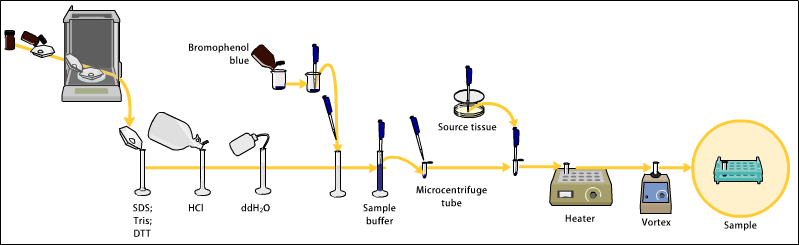
The western blot (sometimes called the protein immunoblot) is a widely used analytical technique used to detect specific proteins in the given sample of tissue homogenate or extract.
It uses gel electrophoresis to separate native or denatured proteins by the length of the polypeptide (denaturing conditions) or by the 3-D structure of the protein (native/ non-denaturing conditions). The proteins are then transferred to a membrane (typically nitrocellulose or PVDF), where they are probed (detected) using antibodies specific to the target protein.

Southern blot test:To detect DNA in sample.

Northern blot test:To detect RNA in sample.

General Procedure

Gel electrophoresis


Gel electrophoresis refers to using a gel as an anticonvective medium and or sieving medium during electrophoresis.
Gel electrophresis is most commonly used for separation of biological macromolecules such as deoxyribonucleic acid (DNA), ribonucleic acid (RNA), or protein; however, gel electrophoresis can be used for separation of nanoparticles.
Electrophoresis refers to the movement of a charged particle in an electrical field.
Gels suppress the thermal convection caused by application of the electric field, and can also act as a sieving medium, retarding the passage of molecules; gels can also simply serve to maintain the finished separation, so that a post electrophoresis stain can be applied.


DNA Gel electrophoresis is usually performed for analytical purposes, often after amplification of DNA via PCR, but may be used as a preparative technique prior to use of other methods such as mass spectrometry, RFLP, PCR, cloning, DNA sequencing, or Southern blotting for further characterization.

Interpretation

Foil, films & laminates

Film : A thin plastic material which up to 0.010’’ (0.25 mm) thickness

Sheet : A material above 0.010’’ thickness

Laminate film : when two completely different films are combined with an adhesive .

Composite film : When two more films are passed through the pair dies and compressed together is called composite film .

Proof spirit

1. In Britain and Canada a mixture of alcohol and water or an alcoholic beverage that contains 49.28% of alcohol by weight, 57.1 per cent by volume at 51°F: up until 1980 used as a standard of alcoholic liquids
2. In the US a similar standard mixture containing 50% of alcohol by volume at 60°F

Alcohol proof is a measure of how much alcohol (ethanol) is contained in an alcoholic beverage. The term was originally used in the United Kingdom and was defined as 7/4 times the alcohol by volume (abv).
The UK now uses the abv standard instead of alcohol proof. In the United States, alcoholic proof is defined as twice the percentage of abv. The measurement of alcohol content and the statement of this content on the bottle labels of distilled beverages (also called liquors or spirits) is regulated by law in the United States. The purpose of the regulation is to provide pertinent information to the consumer.

Raman spectroscopy

Raman spectroscopy is a spectroscopic technique used to study vibrational, rotational, and other low-frequency modes in a system.It relies on inelastic scattering, or Raman scattering, of monochromatic light, usually from a laser in the visible, near infrared, or near ultraviolet range. The laser light interacts with molecular vibrations, phonons or other excitations in the system, resulting in the energy of the laser photons being shifted up or down. The shift in energy gives information about the vibrational modes in the system. Infrared spectroscopy yields similar, but complementary, information.

A sample is illuminated with a laser beam. Light from the illuminated spot is collected with a lens and sent through a monochromator. Wavelengths close to the laser line, due to elastic Rayleigh scattering, are filtered out while the rest of the collected light is dispersed onto a detector.

Theory of Raman spectroscopy
The Raman effect occurs when light impinges upon a molecule and interacts with the electron cloud and the bonds of that molecule. For the spontaneous Raman effect, which is a form of scattering, a photon excites the molecule from the ground state to a virtual energy state. When the molecule relaxes it emits a photon and it returns to a different rotational or vibrational state. The difference in energy between the original state and this new state leads to a shift in the emitted photon's frequency away from the excitation wavelength. The Raman effect, which is a light scattering phenomenon, should not be confused with absorption (as with fluorescence) where the molecule is excited to a discrete (not virtual) energy level.

If the final vibrational state of the molecule is more energetic than the initial state, then the emitted photon will be shifted to a lower frequency in order for the total energy of the system to remain balanced. This shift in frequency is designated as a Stokes shift.

If the final vibrational state is less energetic than the initial state, then the emitted photon will be shifted to a higher frequency, and this is designated as an Anti-Stokes shift.

SNi Reaction

Substitution Nucleophilic internal(SNi) stands for a specific but not often encountered nucleophilic aliphatic substitution reaction mechanism.
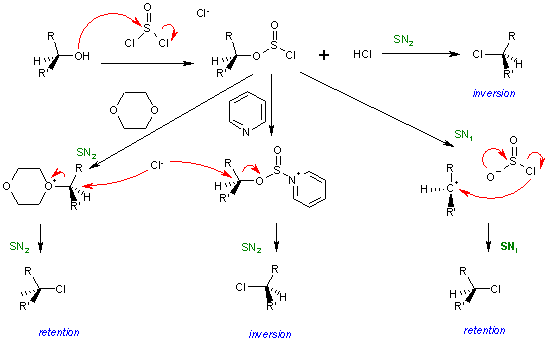
A typical representative organic reaction displaying this mechanism is the chlorination of alcohols with thionyl chloride, or the decomposition of alkyl chloroformates, the main feature is retention of stereochemical configuration.

Thionyl chloride first reacts with the alcohol to form an alkyl chloro sulfite, actually forming an intimate ion pair. The second step is the concerted loss of a sulfur dioxide molecule and its replacement by the chloride, which was attached to the sulfite group. The difference between SN1 and SNi is actually that the ion pair is not completely dissociated, and therefore no real carbocation is formed, which else would lead to a racemisation.
This reaction type is linked to many forms of neighbouring group participation, for instance the reaction of the sulfur or nitrogen lone pair in sulfur mustard or nitrogen mustard to form the cationic intermediate.
This reaction mechanism is supported by the observation that addition of pyridine to the reaction leads to inversion. The reasoning behind this finding is that pyridine reacts with the intermediate sulfite replacing chlorine. The dislodged chlorine has to resort to nucleophilic attack from the rear as in a regular nucleophilic substitution.


In the complete picture for this reaction the sulfite reacts with a chlorine ion in a standard SN2 reaction with inversion of configuration. When the solvent is also a nucleophile such as dioxane two successive SN2 reactions take place and the stereochemistry is again retention. With standard SN1 reaction conditions the reaction outcome is retention via a competing SNi mechanism and not racemization and with pyridine added the result is again inversion.

E-Z notation

E-Z notation, or the E-Z convention, is the IUPAC preferred method of describing the stereochemistry of double bonds in organic chemistry. It is an extension of cis/trans notation that can be used to describe double bonds having three or four substituents.
Following a set of defined rules (Cahn-Ingold-Prelog priority rules), each substituent on a double bond is assigned a priority.
If the two groups of higher priority are on opposite sides of the double bond, the bond is assigned the configuration E (from entgegen, German: [ɛntˈɡeːɡən], the German word for "opposite").
If the two groups of higher priority are on the same side of the double bond, the bond is assigned the configuration Z (from zusammen, German: [tsuˈzamən], the German word for "together").

(E)-But-2-ene

(Z)-But-2-ene

Tautomer

Tautomers are isomers of organic compounds that readily interconvert by a chemical reaction called tautomerization.

This reaction commonly results in the formal migration of a hydrogen atom or proton, accompanied by a switch of a single bond and adjacent double bond. The concept of tautomerizations is called tautomerism. Because of the rapid interconversion, tautomers are generally considered to be the same chemical compound.

Tautomerism is a special case of structural isomerism and can play an important role in non-canonical base pairing in DNA and especially RNA molecules.

Common tautomeric pairs are:
Ketone - enol, e.g., for acetone
Amide - imidic acid, e.g., during nitrile hydrolysis reactions
Lactam - lactim, an amide - imidic acid tautomerism in heterocyclic rings, e.g., in the nucleobases guanine, thymine, and cytosine
Enamine - imine
Enamine - enamine, e.g., during pyridoxalphosphate-catalyzed enzymatic reactions.
Anomers of reducing sugars in solution interconvert through an intermediate open chain form.

Prototropy:It is the most common form of tautomerism and refers to the relocation of a proton.Prototropic tautomerism may be considered as a subset of acid-base behavior. Prototropic tautomers are sets of isomeric protonation states with the same empirical formula and total charge.

Valence tautomerism:It is a type of tautomerism in which single and/or double bonds are rapidly formed and ruptured, without migration of atoms or groups.It is distinct from prototropic tautomerism, and involves processes with rapid reorganisation of bonding electrons. An example of this type of tautomerism can be found in bullvalene.

Another example is open and closed forms of certain heterocycles, such as azide - tetrazole or mesoionic münchnone-acylamino ketene. Valence tautomerism requires a change in molecular geometry and should not be confused with canonical resonance structures or mesomers.

DNA : For NIPER JEE


Introduction
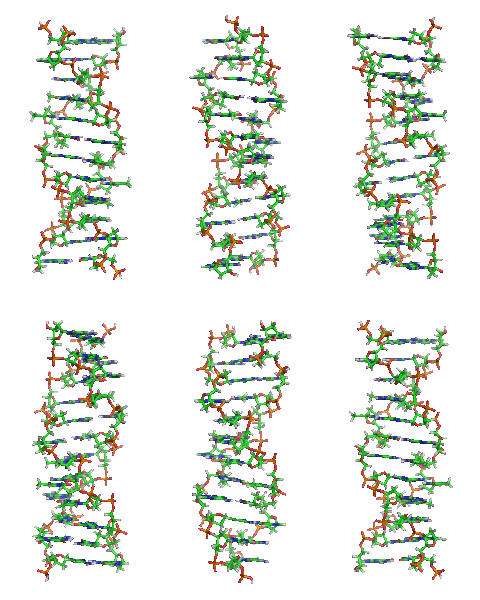
DNA exists in many possible conformations that include A-DNA, B-DNA, and Z-DNA forms.
Only B-DNA and Z-DNA have been directly observed in functional organisms.
The conformation that DNA adopts depends on the hydration level, DNA sequence, the amount and direction of supercoiling, chemical modifications of the bases, the type and concentration of metal ions, as well as the presence of polyamines in solution.

The first published reports of A-DNA X-ray diffraction patterns— and also B-DNA used analyses based on Patterson transforms that provided only a limited amount of structural information for oriented fibers of DNA.
An alternate analysis was then proposed by Wilkins et al., in 1953, for the in vivo B-DNA X-ray diffraction/scattering patterns of highly hydrated DNA fibers in terms of squares of Bessel functions.
In the same journal, James D. Watson and Francis Crick presented their molecular modeling analysis of the DNA X-ray diffraction patterns to suggest that the structure was a double-helix.

Although the `B-DNA form' is most common under the conditions found in cells,it is not a well-defined conformation but a family of related DNA conformations that occur at the high hydration levels present in living cells.
Their corresponding X-ray diffraction and scattering patterns are characteristic of molecular paracrystals with a significant degree of disorder.

Compared to B-DNA, the A-DNA form is a wider right-handed spiral, with a shallow, wide minor groove and a narrower, deeper major groove.
The A form occurs under non-physiological conditions in partially dehydrated samples of DNA, while in the cell it may be produced in hybrid pairings of DNA and RNA strands, as well as in enzyme-DNA complexes.
Segments of DNA where the bases have been chemically modified by methylation may undergo a larger change in conformation and adopt the Z form. Here, the strands turn about the helical axis in a left-handed spiral, the opposite of the more common B form.These unusual structures can be recognized by specific Z-DNA binding proteins and may be involved in the regulation of transcription.


In 1953, James D. Watson and Francis Crick suggested what is now accepted as the first correct double-helix model of DNA structure in the journal Nature.(Nature is very famous international journal having high Impact factor.)

Their double-helix, molecular model of DNA was then based on a single X-ray diffraction image (labeled as "Photo 51")

Chargaff's rules played a very important role in establishing double-helix configurations for B-DNA as well as A-DNA.Chargaff's rules state that DNA from any cell of all organisms should have a 1:1 ratio of pyrimidine and purine bases and, more specifically, that the amount of guanine is equal to cytosine and the amount of adenine is equal to thymine. This pattern is found in both strands of the DNA. They were discovered by Austrian chemist Erwin Chargaff.

Chargaff Parity Rule 1:
The first rule holds that a double-stranded DNA molecule globally has percentage base pair equality: %A = %T and %G = %C.The rigorous validation of the rule constitutes the basis of Watson-Crick pairs in the DNA double helix.

Chargaff Parity Rule 2:
The second rule holds that both %A ~ %T and %G ~ %C are valid for each of the two DNA strands.This describes only a global feature of the base composition in a single DNA strand.

A DNA sequence is called "sense" if its sequence is the same as that of a messenger RNA copy that is translated into protein.
The sequence on the opposite strand is called the "antisense" sequence.

Plasmid is a DNA molecule that is separate from, and can replicate independently of, the chromosomal DNA.They are double-stranded and, in many cases, circular. Plasmids usually occur naturally in bacteria, but are sometimes found in eukaryotic organisms (e.g., the 2-micrometre-ring plasmid in Saccharomyces cerevisiae).

Extra questions...(example for NIPER JEE)

Deploy
Definition: redistribute, station troops or weapons
Synonyms: arrange, display, dispose, expand, extend, fan out, form front, open, position, put out patrol, set out, set up, spread out, take battle stations, unfold, use , utilize
Antonyms: not use, withhold

Disburse
Definition: spend money
Synonyms: acquit, ante up, come across, come through, come up with, contribute, cough up, deal, defray, dispense, disperse, distribute, divide, divvy, dole out, expend, foot the bill, give, lay out, measure out, outlay, partition, pay out, pony up, put out, shell out, use
Antonyms: deposit, hoard, hold, retain, save, set aside

Macabre
Definition: eerie; deathlike
Synonyms: cadaverous, deathly, dreadful, frightening, frightful, ghastly, ghostly, ghoulish, grim, grisly, gruesome, hideous, horrible, horrid, lurid, morbid, offensive, scary, spookish, spooky, terrible, unearthly, weird
Notes: macabre means shockingly repellent or inspiring horror; bizarre means odd or unusual
Antonyms: common, living, normal

Solicitous
Definition: worried
Synonyms: anxious, appetent, apprehensive, ardent, athirst, attentive, avid, beside oneself, careful, caring, concerned, devoted, eager, earnest, heedful, impatient, keen, loving, mindful, raring, regardful, tender, thirsty, troubled, uneasy, worried sick, worried stiff, zealous
Antonyms: easy-going, laid-back, unafraid, unworried

Question: Varsha walk 3km in north from her home and turn East,again walk 5km and turn right ,than she walk 2km more to reach Temple.What is the distance between her home and temple?
These are only few examples to inform you that these types of questions are also asked in NIPER JEE.

Logical Questions

Answers are declared !
1. Look at this series: 7, 10, 8, 11, 9, 12, ... What number should come next?
  1. 7
  2. 10
  3. 12
  4. 13
Answer: Option B
Explanation:
This is a simple alternating addition and subtraction series. In the first pattern, 3 is added; in the second, 2 is subtracted.

2.Look at this series: 36, 34, 30, 28, 24, ... What number should come next?
  1. 20
  2. 22
  3. 23
  4. 26
Answer: Option B
Explanation:
This is an alternating number subtraction series. First, 2 is subtracted, then 4, then 2, and so on.

3. Look at this series: 22, 21, 23, 22, 24, 23, ... What number should come next?
  1. 22
  2. 24
  3. 25
  4. 26
Answer: Option C
Explanation:
In this simple alternating subtraction and addition series; 1 is subtracted, then 2 is added, and so on.

4. Look at this series: 53, 53, 40, 40, 27, 27, ... What number should come next?
  1. 12
  2. 14
  3. 27
  4. 53
Answer: Option B
Explanation:
In this series, each number is repeated, then 13 is subtracted to arrive at the next number.

5. 28,25,5,21,18,5,14
  1. 11,5
  2. 10,7
  3. 11,8
  4. 10,5
Answer: Option A
Explanation:
This is an alternating subtraction series with the interpolation of a random number, 5, as every third number. In the subtraction series, 3 is subtracted, then 4, then 3, and so on.

6. 8,11,21,15,18,21,22
  1. 25,18
  2. 25,21
  3. 25,29
  4. 24,19
Answer: Option B
Explanation:
This is an alternating addition series, with a random number, 21, interpolated as every third number. The addition series alternates between adding 3 and adding 4. The number 21 appears after each number arrived at by adding 3.

7. 42,40,38,35,33,31,28
  1. 25,22
  2. 26,23
  3. 26,24
  4. 25,23
Answer: Option C
Explanation:
This is an alternating subtraction series in which 2 is subtracted twice, then 3 is subtracted once, then 2 is subtracted twice, and so on.

8. Look at this series: F2, __, D8, C16, B32, ... What number should fill the blank?
  1. A16
  2. G4
  3. E4
  4. E3
Answer: Option C
Explanation:
The letters decrease by 1; the numbers are multiplied by 2.

9. Look at this series: 664, 332, 340, 170, ____, 89, ... What number should fill the blank?
  1. 85
  2. 97
  3. 109
  4. 178
Answer: Option D
Explanation:
This is an alternating division and addition series: First, divide by 2, and then add 8.

10. Look at this series: 70, 71, 76, __, 81, 86, 70, 91, ... What number should fill the blank?
  1. 70
  2. 71
  3. 80
  4. 96
Answer: Option A
Explanation:
In this series, 5 is added to the previous number; the number 70 is inserted as every third number.

Circular dichroism

Circular dichroism (CD) refers to the differential absorption of left and right circularly polarized light.

It is exhibited in the absorption bands of optically active chiral molecules. CD spectroscopy has a wide range of applications in many different fields.

Ultra Violet CD is used to investigate the secondary structure of proteins.

UV/Vis CD is used to investigate charge-transfer transitions.

Near-infrared CD is used to investigate geometric and electronic structure by probing metal d→d transitions.

Vibrational circular dichroism, which uses light from the infrared energy region, is used for structural studies of small organic molecules, and most recently proteins and DNA.

Electromagnetic radiation consists of an electric and magnetic field that oscillate perpendicular to one another and to the propagating direction.While linearly polarized light occurs when the electric field vector oscillates only in one plane and changes in magnitude, circularly polarized light occurs when the electric field vector rotates about its propagation direction and retains constant magnitude. Hence, it forms a helix in space while propagating. For left circularly polarized light (LCP) with propagation towards the observer, the electric vector rotates counterclockwise.For right circularly polarized light (RCP), the electric vector rotates clockwise.

Fluorescence Spectroscopy

Luminescence – the process of absorption of radiation and re-emmiting it, is called luminescence.Light produced by luminescence is called cold light.

Fluorescence – when beam of light is incident on a surface they emit visible light.this phenomenon is called fluorescence.

Phophorescence – In this phenomenon light is emitted continuously even when the incident light is cut off.

Materials exhibiting fluorescence emit excess radiation within 10-6 to 10-4 se. while materials exhibiting phosphorescence emit light within 10-4 to 20 seconds or longer. Thus lifetime of phosphorescence is longer than fluorescence.


In fluorescence wavelength choices can be made in both emission and absorption wavelengths.
Molecule absorbs light in 10-15 sec.
When the molecule absorbs light it moves to exited state . After this it may return directly to ground state. So there will be no fluorescence.
But in fluorescence the molecule from excited state goes to first singlet excited state and from this it returns to ground state. This is called fluorescence. The movement of electron from the excited state to singlet excited state releases energy by colloisional deactivation. This results in increase of wavelength.
Thus after fluorescence the wavelength of radiation increases.

The time required to execute a vibration is 10-13 sec.

X-RAY DIFFRACTION

About 95% of all solids can be described as crystalline.

An electron in an alternating electromagnetic field will oscillate with the same frequency as the field. When an X-ray beam hits an atom, the electrons around the atom start to oscillate with the same frequency as the incoming beam. In almost all directions we will have destructive interference, that is, the combining waves are out of phase and there is no resultant energy leaving the solid sample. However the atoms in a crystal are arranged in a regular pattern, and in a very few directions we will have constructive interference. The waves will be in phase and there will be well defined X-ray beams leaving the sample at various directions. Hence, a diffracted beam may be described as a beam composed of a large number of scattered rays mutually reinforcing one another.

X-rays: 0.1 – 100 oA.
For analytical purposes 0.7 – 2 oA is the most useful region.

This technique deals with the removal of electrons from the inner shells of atom.

If K-shell loses its electron and its replaced by electron from L-shell, the resulting X-ray is called k X-ray and its energy is given as:
EK = EL - EK

Electrons in the atom emit the X-ray at same frequency as that incident ray in all directions. If the waves undergo constructive interference and are said to be diffracted by crystal plane.
Each crystalline stance diffracts the radiation in own unique way and it is governed by Bragg’s equation.
n(lamda)=2d sin(theta)

APPLICATIONS:

1. Structure of crystals: - size of crystal planes can be measured.
2. Polymer characterization: Powder method can be used for this. Non-crystalline portion scatters the radiation and crystalline portion diffracts it.
3. Polymer crystallinity : A polymer can be considered partly crystalline and partly amorphous. The crystalline domains act as a reinforcing grid, like the iron framework in concrete, and improves the performance over a wide range of temperature. However, too much crystallinity causes brittleness. The crystallinity parts give sharp narrow diffraction peaks and the amorphous component gives a very broad peak (halo). The ratio between these intensities can be used to calculate the amount of crystallinity in the material.
4. Particle size determination:
a. Spot counting method: used for determining particle size less than 5 microns. The pattern consists of series of lines or rings which appear like spots.

SPECTRAL ANALYSIS

1. ultra violet & visible spectroscopy :

basic principle ,characteristics region of spectrum, energy levels & selection rules,
woodward – fieser , influence of substituent ,ring size & strain
on spectral characteristics , solvent effect non-conjugated interaction ,spectral correlation
with structure , uv- values .
(ref.pavia )

2. infrared spectroscopy :

characteristics region of spectrum , influence of substituents , ring size , hydrogen bond ,
vibrational coupling & field effect on frequency . spectral interpretation , ir value.
.(ref.pavia )

3. Nulear magnetic resonance spectrum :
Magnetice nuclei , chemical shift & shielding , relaxation ,processes ., chemical &^
magenetce non equivanence , local dinagnetce shielding , magnetice anisotropy , spin –
spin splitting , pascal triangle , coupling constant .
.(ref.pavia )

Application of raman spectra nicely.

c)Analytical techniques

1. chromatography : ( only go for basics)
general principles , classification , normal & reversed phase , bonded phase,
sepration mechanisms .
types:
a. column chroma tography .
b. flash chromatography .
c. vaccum liquid chromatography .
d. hplc
e. tlc, hptlc, oplc (over pressure layer chromatography )
f. centrifugal chromatography .
g. counter – current chromatography .
h. droplet – counter current chromatography .
i. ion exchange , affinity , size exclusion & ion pair chromatography perfusion , fast protein liquid chromatography, supercritical chrmo.
j. gc, gc-ms, lc- ms .
2. Thermal techniques :dsc, dta, tga .ord , cd (Very nicely) .
3. Electrophoresis : capillary, gel .
4. other : crystallography , spectrofluorimetry Metries like potentiometry, polarimetry only imp equations and reference standard and imp applications if any…
Refer standard books like pavia, kemp, skoog…

Softwares

Pharmacophore mapping software: CATALYST, DISCO, HYPOGEN

Molecular Docking Software: AUTODOCK, GLIDE, GOLD, FLEXX

QSAR: Discovery studio package, CoMFA, CoMSIA

Molecular Modelling Software: NODELLER, WHAT IF

Active Site finding Software: Schrodinger Package, MOE, Q-site, Metasite finder (Metabolic Site Prediction), STARDROP (Metabolic Site Prediction)

Molecular Dynamics Softwares: AMBER, OPLS, GROMOS, GROMOS, NAMD, OPLS, CHARMM

BLAST Database

In bioinformatics, Basic Local Alignment Search Tool, or BLAST, is an algorithm for comparing primary biological sequence information, such as the amino-acid sequences of different proteins or the nucleotides of DNA sequences.

A BLAST search enables a researcher to compare a query sequence with a library or database of sequences, and identify library sequences that resemble the query sequence above a certain threshold.

BLAST p- compare aminoacid query sequences

BLAST n- compare nucleotide query sequences

BLAST x- compare nucleotide query sequence translated in all reading frames against protein sequence database

t BLAST n- compare protein query sequence against nucleotide query sequence database dynamically translated I all reading frames

t BLAST x- compare 6-frame translations of nucleotide query sequence against 6-frame translation of nucleotide sequence database

Baeyer-Villiger Oxidation

The Baeyer-Villiger Oxidation is the oxidative cleavage of a carbon-carbon bond adjacent to a carbonyl, which converts ketones to esters and cyclic ketones to lactones. The Baeyer-Villiger can be carried out with peracids, such as MCBPA, or with hydrogen peroxide and a Lewis acid.

The regiospecificity of the reaction depends on the relative migratory ability of the substituents attached to the carbonyl. Substituents which are able to stabilize a positive charge migrate more readily, so that the order of preference is: tert. alkyl > cyclohexyl > sec. alkyl > phenyl > prim. alkyl > CH3. In some cases, stereoelectronic or ring strain factors also affect the regiochemical outcome.
Mechanism of the Baeyer-Villiger Oxidation

Corey-Kim Oxidation

The Corey-Kim Oxidation allows the synthesis of aldehydes and ketones from primary alcohols and secondary alcohols, respectively.

Mechanism of the Corey-Kim Oxidation
Dimethylchlorosulphonium ion is generated in situ from NCS and DMS:
The following steps are comparable to the Swern Oxidation:

Eschweiler-Clarke Reaction

This reaction allows the preparation of tertiary methylamines from secondary amines via treatment with formaldehyde in the presence of formic acid. The formate anion acts as hydride donor to reduce the imine or iminium salt, so that the overall process is a reductive amination. The formation of quaternary amines is not possible.

Mechanism of the Eschweiler-Clarke Reaction

Favorskii Reaction


The rearrangement of cyclopropanones, often obtained as intermediates from the base-catalyzed reaction of α-halo ketones, leading to carboxylic acids and derivatives.

Mechanism of the Favorskii Reaction
Esters are obtained if alkoxide bases are used:
A direct conversion from α-halo ketones is possible:
Ring-contraction:

Gabriel Synthesis

Potassium phthalimide is a -NH2-synthon which allows the preparation of primary amines by reaction with alkyl halides. After alkylation, the phthalimid is not nucleophile and does not react anymore. Product is cleaved by reaction with base or hydrazine, which leads to a stable cyclic product.

Mechanism of the Gabriel Synthesis
Note: Phthalimide is acidic!
Cleavage:

Pinacol Coupling Reaction


This reaction involves the reductive homo-coupling of a carbonyl compound to produce a symmetrically substituted 1,2-diol. The first step is single electron transfer of the carbonyl bond, which generates radical ion intermediates that couple via carbon-carbon bond formation to give a 1,2-diol. The example depicted above shows the preparation of pinacol itself.

Pinacol and other highly substituted 1,2-diols tend to undergo dehydration with rearrangement under acid-catalysis.
Reformatsky Reaction


The formation of ester-stabilized organozinc reagents and their addition to carbonyl compounds

Mechanism of the Reformatsky Reaction
Organozinc compounds are prepared from α-halogenesters in the same manner as Grignard Reagents. This reaction is possible due to the stability of esters against organozincs. Due to the very low basicity of zinc enolates, there is hardly any competition from proton transfer, and the scope of carbonyl addition partners is quite broad. In presence of ketones or aldehydes, the organozinc compounds react as the nucleophilic partner in an addition to give β-hydroxy esters.


An ester-stabilized organozinc reagent

Compared to organolithiums and organomagnesium halides (Grignard reagents), the organozinc halide reagents used in the Reformatsky Reaction are relatively stable, and many are available commercially.

Suzuki Coupling Reaction

Suzuki Coupling


The scheme above shows the first published Suzuki Coupling, which is the palladium-catalysed cross coupling between organoboronic acid and halides. Recent catalyst and methods developments have broadened the possible applications enormously, so that the scope of the reaction partners is not restricted to aryls, but includes alkyls, alkenyls and alkynyls. Potassium trifluoroborates and organoboranes or boronate esters may be used in place of boronic acids. Some pseudohalides (for example triflates) may also be used as coupling partners.

Mechanism of the Suzuki Coupling


One difference between the Suzuki mechanism and that of the Stille Coupling is that the boronic acid must be activated, for example with base. This activation of the boron atom enhances the polarisation of the organic ligand, and facilitates transmetallation. If starting materials are substituted with base labile groups (for example esters), powdered KF effects this activation while leaving base labile groups unaffected.


In part due to the stability, ease of preparation and low toxicity of the boronic acid compounds, there is currently widespread interest in applications of the Suzuki Coupling, with new developments and refinements being reported constantly.

Alkaloid

True alkaloids: contain heterocyclic Nitrogen which is derived from amino acid and always basic in nature due to presence of lone pair of electrons on nitrogen.

Proto alkaloids: are simple amines in which Nitrogen is not heterocyclic. E.g. ephedrine, Colchicine, mescaline


Pseudo alkaloids: they are not derived from amino acids but they show positive test for alkaloids. E.g. purines(caffeine), steroidal and terpenoidal alkaloids Conessine, solanidine, protoveratrine, aconine.


Volatile alkaloids: coniine, nicotine, sparteine


Colored alkaloids: Berberine (yellow), Betanidin (Red)


• Some of proto and pseudo alkaloids show higher solubility in water e.g. Colchicine, caffeine, quinine HCl are freely soluble in water. So solubility of alkaloid is also employed for extraction procedures.

Alkaloids with Primary amine Nitrogen: Mescaline
Alkaloids with Secondary amine Nitrogen: Ephedrine
Alkaloids with Tertiary amine Nitrogen: Atropine
Alkaloids with Quaternary Nitrogen: Tubocurarine

Chemical test:
1. Mayer’s reagent test (K+ mercuric iodide solution)=> Cream colored ppt
2. Dragendroff’s reagent (K+ bismuth iodide solution)=> Red brown ppt
3. Wagner’s reagent (iodine K+ iodide solution )=> Red brown ppt
4. Hager’s reagent (Picric acid) => Yellow colored ppt
5. Picrolonic acid => Yellow colored ppt

Gene transfer into cells.

There are different way to introduce genetic material into cells.


Transduction:Introduction of Genetic material into bacteria using virus (bacteriophage).


Transformation:Introduction of Genetic material into bacteria(prokaryots) from environment.


Conjugation:It is the transfer of genetic material between bacterial cells by direct cell-to-cell contact or by a bridge-like connection between two cells.


Transfection:Introduction of Genetic material into Eukaryota by physical or biological mechanism.

World's Top Ten Biotech componies

1 Amgen :USA
2 Genentech :USA
3 Genzyme :USA
4 UCB :Belgium
5 Gilead Sciences :USA
6 Serono :Switzerland
7 Biogen Idec :USA
8 CSL :Australia
9 Cephalon :USA
10 MedImmune :USA

The country’s biggest drug manufacturing hub is in Baddi, Himachal Pradesh.

Pharmaceutical companies in Himachal Pradesh are queuing up to register new products at the drugs controller’s office before the seven-year tax holiday window for hill states ends on March 31. Over 450 drug companies have their production units in the state.

The clarification by the Central Board of Excise and Customs, Ministry of Finance, last month, stated any new product coming out of the existing machinery after the cut-off date will attract excise duty. This decision triggered the rush for approval of new products.

OTC (Over the Counter drug) Leader Paras

Personal care products

Livon
Borosoft
Recova
Setwet Range
Livon HairGain
Zatak

Healthcare products

Moov
Krack
ItchGuard
RingGuard
Dermicool
D'Cold
Stopache
Moov Neck & Shoulder
Itchguard Powder
Dermicool Skin Defense
Dermicool Skin Defense Hand Sanitizer
Nextime

Nuclear Magnetic Resonence (NMR) Spectroscopy

• NMR is absorption spectrometry.
• Permits identification of atomic configuration.
• Radiofrequency waves are used in NMR.RF waves have long wavelength so less energy.
• Range of RF is from 30 KHZ TO 30 MHZ.
• Felix Bloch and Edward Purcell received Nobel Prize for NMR discovery.
• NMR mechanism includes change in spin orientation on exposure to magnetic field.
• Spin quantum number(I) describes angular momentum.
• Total spin quantum number depends on the number of nucleons and symmetry of charge distribution.
Precessional frequency-No. of spin carried out by the nucleus in the presence of magnetic field per second.
Thus when magnetic field applied the nucleus spins with precessional frequency.
Before application of magnetic field it was moving with random frequency.
• When no magnetic field, only one energy level. but in presence of magnetic field 2 energy levels with aligned and opposite orientations of the nuclear spins.
• Precessional frequency is directly proportional to field strength(ν)ν ά Bo
• Remember-
When mag.field=1.4 tesla,ν=60MHZ.
When mag.field=2.3 tesla,ν=100MHZ.
When mag.field=7.0tesla,ν=300MHZ.
When mag.field=14.1Tesla,ν=600MHZ.
1 Tesla=104 Gauss.so 1.4 Tesla=14000 Gauss.
Imp-Tesla is measure of magnetic flux density not field strength.
• Resonance occurs when,
Applied frequency from RF oscillator=precissional frequency of spinning nucleus.


Relaxation process of nucleus
• Spin-lattice or longitudinal relaxation-gives energy to lattice so system gets heated.
• Spin-spin or transverse relaxation-give energy to nearby nuclei so no net change in energy of system.
REMEMBER:spin-lattice relaxation time (T1)determines the rate at which absorption of RF can occur.
Rememeber : relaxation process follow first order process and T1 is the reciprocal of first order rate constant.
T2 is spin-spin relaxation time.
Remember-if T1 and T2 small,broad absorption lines,if they r large sharp abs. lines.
FOR non-viscous solids T1 is large so sharp lines in NMR spectrum.
FOR 14N nucleus T1 is small due to quadrapole so broad signals in 14N NMR.


Internal standards
• TMS(tetramethyl silane)(0.01-1%) – universally accepted,used only in organic solvents.TMS is used in 1H and 13C NMR.
• Sodium salt of 3-(trimethylsilyl)-propane sulfonic acid and DDS is used in aqueous solvents.
• CFCl3 for 19F NMR.
• H3PO4 for 31P NMR.
• NH3(absolute standard) and nitromathane(mostly used) for 14N NMR.
• Water for 17O NMR.


Solvents for NMR
• CDCl3 mostly used.
• Should not contain hydrogen (aprotic solvents)
• For polar solutes-D2O,DMSO-d6,CCl2,CS2 ,CF3.
• Compound solubility should be atleast 10%.

NIPER JEE-What to read.

At present there are total Fourteen departments in this institute.

1. Medicinal chemistry
2. Natural products
3. Pharmacology and toxicology
4. Regulatory Toxicology
5. Pharmaceutics
6. Pharmaceutical analysis
7. Pharmaceutical technology (Bulk drugs) (chemistry)
8. Pharmaceutical technology (Formulation) (Pharmaceutics)
9. Pharmaceutical technology Biotechnology (PTBT)
10. Biotechnology
11. Practice of pharmacy.
12. Pharmacoinformatics
13. M. B. A. (Pharm)
14. Traditional Medicine

National Institute of Pharmaceutical Education & Research, Mohali, Punjab-160062

Dear fellowers…………….
To live with success is to have healthier intellect. NIPER is one of the targets to achieve success. I am sure you all have a very good perception of the importance of NIPER and I am proud of being here in NIPER. I have not seen many institutes but of the much I have seen and the much I have heard, NIPER is amongst the best. I am sure most of you would be aspiring of being in NIPER. And those who are sure of their capability and competence should prove their metal here.

I have compiled sets of certain points for each subject. These are just grids for the study and are helpful for the specialization papers. You need not to be thorough of it but if not thoroughly, atleast you should be aware of it. None of it should be something heard first. By the way most of these are covered in B. Pharm syllabus. For the general paper, my experience is that one should revise the GATE preparation. Most of the questions in general paper are quite easy. But be sure you are well prepared for it since this is the screening paper. Entrance pattern:

Well entrance consists of 200 questions in 2 hours. (Please check it in Brochure).

Well questions will be very easy so no need to go in depth of the topic. Basic concepts
based questions are asked.

M. Pharma branches and M.B.A. has a common entrance paper. So read some
general knowledge aspects also…………….

This syllabus is just like GATE entrance but more specific in
Basic Chemistry instead of medicinal chemistry.
Specialization subjects: What to study???

1. Medicinal chemistry and Bulk Drugs (Pharma. Tech.)
1. IUPAC nomenclature, R and S nomenclature, E and Z isomerism, atropisomerism, Conformations
2. Hybridization, aromaticity, Huckel’s rule reaction mechanisms- Electrophilic,
Nucleophilic, SN1, SN2, SNi, Elimination E1 E2 etc.
3. Ester hydrolysis, Aac1 Aac2……all eight mechanisms (Jerry march) Markovnikoves
rule, Bredts rule, Stereoselectivity, stereospecificity, regioselectivity,chemoselectivity, chirality, stereochemistry, conformations, rearrangements, acids and bases.
4. Imine-enamine Tautomerism, keto-enol tautomerism, pericyclic reactions, racemic mixture, resolution methods.
5. Amino acids proteins, various methods for amino acid detection, Ninhydrin test,peptide sequencing, structures of amino acids, essential and nonessential amino acids,
6. Introduction to thermal methods of analysis like, TGA, DSC, DTA etc.
7. Carbohydrates classification, osazone test, mutarotation, etc,
8. Various Heterocycles, Heterocycle synthesis, reactions.
9. Introduction to Redox reactions
10. Spectroscopy: (basics specially): Very very IMP topic.NMR, and C-NMR ranges from Morrison & Boyd or Pavia,Mass -Basic concepts about various peaks M+1, molecular ion, base peak etc.
(Silverstein)IR - Frequencies of various groups specially carbonyls.UV
11. Chromatography: detailed.
12. Reaction kinetics, first second third and pseudo first order reactions, radio labeling for determination of mechanism.
13. Common condensation reactions like Aldol, Claisen Perkin, Dickmann, Darzen etc.
14. Other reactions like Cannizarro’s reaction, Prins reaction, especially reactions of
carbonyl compounds.

References:
1. Jerry March
2. Morrison and Boyd
3.I. L. Finar Vol-I and Vol-II
4. Eliel


2. Natural Products: In natural products more stress should be given on phytochemistry part rather than biological aspects.
1. Methods of extraction, isolation and characterization of natural products. Various separation techniques used for isolation of natural products.
2. Biosynthetic pathways.
3. Primary metabolites, their examples.
4. Secondary metabolites, various classes of secondary metabolites (e.g. Alkaloids, glycosides, tannins, lignans, saponins, lipids, flavonoids, coumarins,anthocyanidines etc.). Here most imp. Part is chemistry of these classes.
5. Important therapeutic classes: antidiabetics, hepatoprotectives,immmunomodulators, neutraceuticals, natural products for gynecological disorders, anti-cancer, anti-viral (mainly anti-HIV), adaptogens etc.
6. Dietary antioxidants, Marine natural products, Plant growth regulators.
7. Spectroscopy: Basic concepts of UV, NMR, IR and Mass spectroscopy. Give more stress on IR and NMR.
8. Stereochemistry: Basic concepts.
9. Fischer, sawhorse and newmon projection formulaes.
10. Biological sources of important classes of natural products. (Selected ones only)
11. Standardization of natural products.
12. What is difference between natural products and pharmacognosy?

References:
1. For various therapeutic classes: Trease and Evans
2. For spectroscopy: Silverstein, Pavia, Kemp.
3. For stereochemistry: I.L. Finar vol-II


3. Pharmacology and toxicology:

1. Pharmacokinetics, pharmacodynamics, pharmacological effect, desired,undesired, toxic, adverse effects.
2. Bioavailability, bioequivalence, various factors of ADME. (From Bramhankar)
3. Drug metabolism: various pathways and other details.
4. Drug interactions, agonist, antagonist, partial agonist, protein binding, drug distribution, distribution volume, excretion pathways etc.
5. Pharmacological screening: general principles, various screening models,
screening methodologies (in vitro and in vivo tests).
6. Mechanism of drug action, drug-receptor interaction.
7. Various adrenergic, cholinergic and other receptors
8. Detailed study of CNS pharmacology
9. Study of basis of threshold areas of work in NIPER in pharmacology dept.
mentioned in brochure.
10. Diseases: study of the pharmacology of the diseases and drugs used with mode of action especially of diabetes, malaria, leishmaniasis, TB, hypertension, myocardial ischemia, inflammation, and immunomodualtion.
11. Chemotherapy and pathophysiology- knowledge of antibiotics, their mode of action and the microorganisms responsible for various common diseases.
12. Bioassay methods, various requirements. Brief knowledge of the statistical tests.

References:
1. F. S. K. Barar
2. Rang and Dale
3. Wilson and Griswold (for Mechanism)
4. Kasture (for Bioassay and Screening)


4. Pharmaceutics and formulation (Pharm. tech.)

1. Drug delivery systems (DDS): NDDS models, osmotic pumps, various release patterns eg. Controlled release, delayed release. Sustained release etc., order of release. Oral controlled DDS, factors affecting controlled release.
2. Carriers in DDS: polymers and their classification, types, carbohydrates, surfactants,
proteins, lipids, prodrugs etc.
3. Transdermal drug delivery systems (TDDS): principles, absorption enhancers,evaluation of TDDS.
4. Parenterals: requirements, advantages, disadvantages, release pattern, route of drug
delivery.
5. Drug targeting: microspheres, nano particles, liposomes, monoclonal antibodies, etc.
6. Preformulation detailed.
7. Complexation, solubilization, polymerization, viscosity measurements.
8. Dosage form development- stages, implications of dosage form.
9. Additives of formulation, types, examples, advantages, disadvantages, drug excipient
interaction, incompatibility, various types of incompatibilities.
10. Dosage forms: solid (tablets, capsules, pills etc), liquid (emulsion, suspension etc),
sterile ( injectables), aerosols. Principles, advantages, disadvantages and problems.
11. Coating - in detail.
12. Packaging: materials, labeling etc. Types of containers (eg. Tamper-proof containers)
13. In process controls, Product specification, documentation.
14. Compartmental modeling. (From Bramhankar)
15. Bioavailability, bioequivalence studies. Methods of improvement of oral bioavailability.
16. Evaluation of formulation, principles and methods of release control in oral formulations.

References:
1. Notes of Gudsurkar Sir (Most important)
2. Remington’s Pharmaceutical Sciences
3 Others: Bramhankar Lachmann Alfred Martin Liberman Series


5. Pharmaceutical analysis:
1. Stability testing of pharmaceuticals, various stability tests, kinetic studies, shelf life determination, thermal stability, formulation stability.
2. Various analytical techniques
3. Tests: physical and chemical tests, limit tests, microbiological tests, biological tests, disintegration and dissolution tests.
4. Spectroscopic methods; UV, NMR, IR, MS, FT-IR, FT-NMR, ATR (Attenuated Total Reflectance), FT-Raman- basics and applications.
5. Thermal techniques: DSC, DTA, TGA, etc.
6. Particle sizing: law of diffraction.
7. Electrophoresis: capillary electrophoresis.
8. Chromatography- detailed.
9. QA and QC: GLP, TQM, ISO system.
10. Preformulation, cyclodextrin inclusion compounds
11. Solubility: pH, pka, surfactant HLB values, Rheology.
12. Crystallinity, polymorphism, solvates and hydrates, crystal habits, porosity,surface area flow properties.
13. Dosage forms, Stages of dosage form development
14. Osmolality, osmolarity, osmotic pressure, conductivity, Preservatives, Media for
bioassay.

References:
1. Willard
2. Silverstein
3. Kemp
4. Pavia (for spectroscopy)
5. Others like Alfred Martin, Chatwal, Garry Christen


5. Pharmaceutical analysis:
1. Stability testing of pharmaceuticals, various stability tests, kinetic studies, shelf
life determination, thermal stability, formulation stability.
2. Various analytical techniques
3. Tests: physical and chemical tests, limit tests, microbiological tests, biological tests, disintegration and dissolution tests.
4. Spectroscopic methods; UV, NMR, IR, MS, FT-IR, FT-NMR, ATR (Attenuated Total Reflectance), FT-Raman- basics and applications.
5. Thermal techniques: DSC, DTA, TGA, etc.
6. Particle sizing: law of diffraction.
7. Electrophoresis: capillary electrophoresis.
8. Chromatography- detailed.
9. QA and QC: GLP, TQM, ISO system.
10. Preformulation, cyclodextrin inclusion compounds
11. Solubility: pH, pka, surfactant HLB values, Rheology.
12. Crystallinity, polymorphism, solvates and hydrates, crystal habits, porosity,surface area flow properties.
13. Dosage forms, Stages of dosage form development
14. Osmolality, osmolarity, osmotic pressure, conductivity, Preservatives, Media for bioassay.

References:
1. Willard
2. Silverstein
3. Kemp
4. Pavia (for spectroscopy)
5. Others like Alfred Martin, Chatwal, Garry Christen

Pharma Leaders of INDIA


Malvinder Singh, CEO and MD, Ranbaxy
Rs 25,196.48 crore (Rs 251.96 billion)


Dr Kallam Anji Reddy, chairman, Dr Reddy's Labs
Rs 4,162.25 crore (Rs 41.622 billion)


Y.K.Hamied,Chairman & Managing Director ,Cipla
Rs 3,763.72 crore (Rs 37.637 billion).


Dilip Sanghvi ,Chairman, Sun Pharma Industries
Rs 2,463.59 crore (Rs 24.635 billion)


Dr. Desh Bandhu Gupta,Chairman,Lupin Labs
Rs 2,215.52 crore (Rs 22.155 billion).


Mr. P.V.Ramaprasad Reddy, Chairman,Aurobindo Pharma 
Rs 2,080.19 crore (Rs 20.801 billion)


Dr.H.B. Joshipura – Chairman,GlaxoSmithKline Pharma-India
Rs 1,773.41 crore (Rs 17.734 billion)


Pankajbhai Patel,Chairman & Managing Director, Cadila Healthcare
Rs 1,613.00 crore (Rs 16.13 billion)


Dr. Shailesh Ayyangar, MD- India , Vice President - South Asia,Aventis Pharma
Rs 983.80 crore (Rs 9.838 billion)


Mr. R. S. Hugar,Chairman, Ipca Laboratories
Rs 980.44 crore (Rs 9.804 billion)